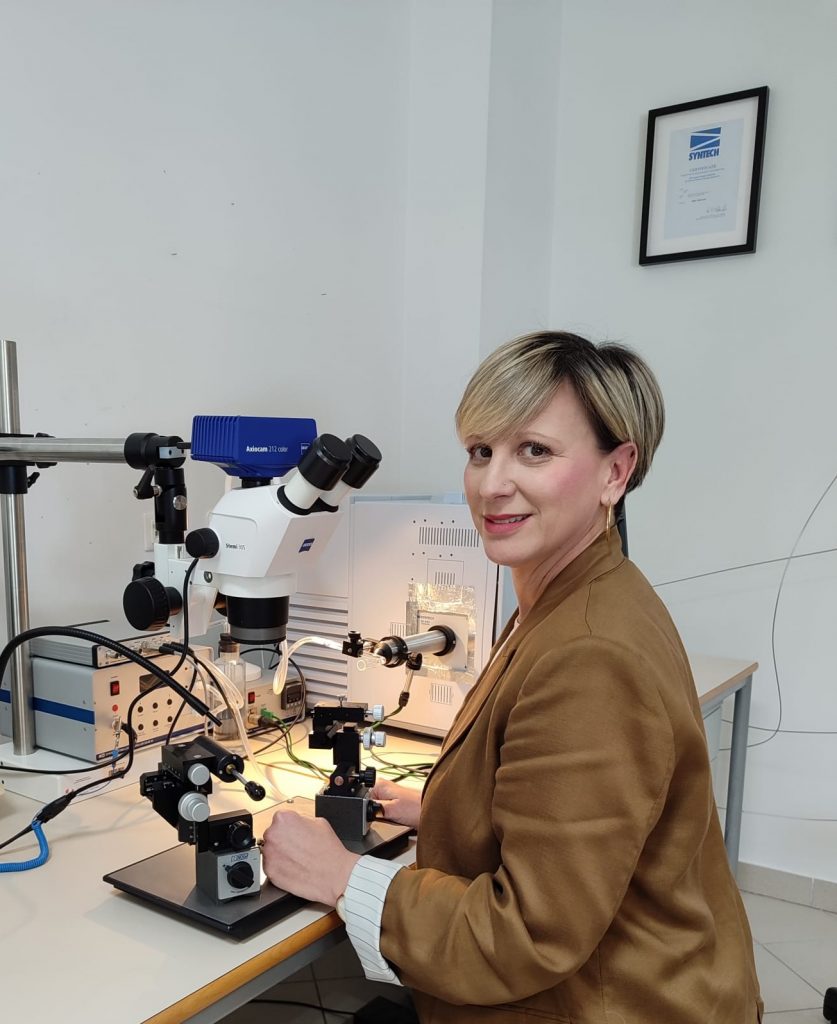
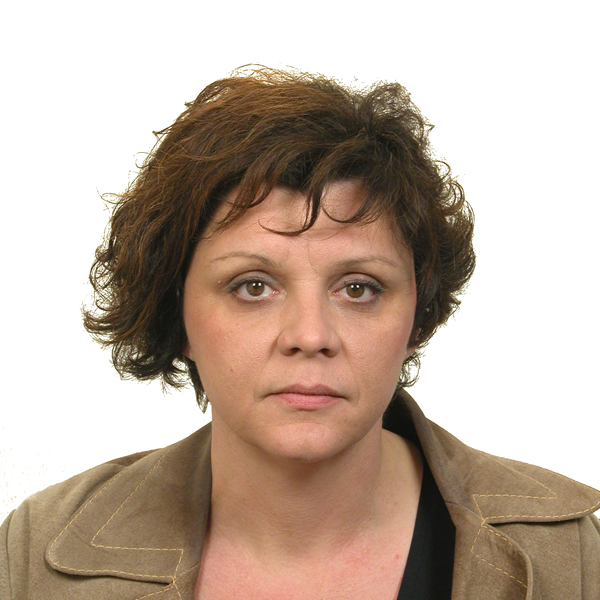
We are proud to announce that on May 9, 2026. the Agroklub portal has published an extensive interview with our distinguished scientist and project leader, Dr.Elda Vitanović.
In this inspiring conversation, Dr. Vitanović reflects on her rich professional journey and career development, with a special emphasis on the current Croatian Science Foundation project she successfully leads: “Novel approach to olive fruit fly (Bactrocera oleae, Rossi) monitoring and/or control using volatile compounds produced by brewing by-product – BeerBy-4-OliveFly“ (IP-2022-10-9643).
Through the interview, you can learn more about the project’s objectives, its significance for the wider community, and the challenges she faces as the head of a research team.
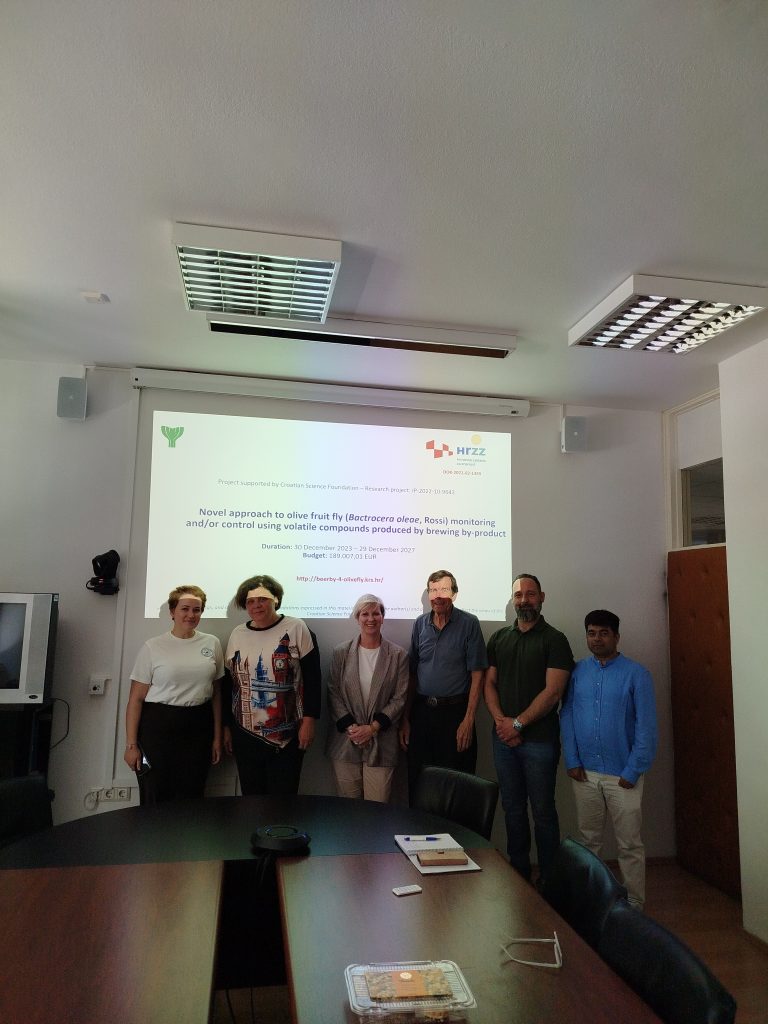
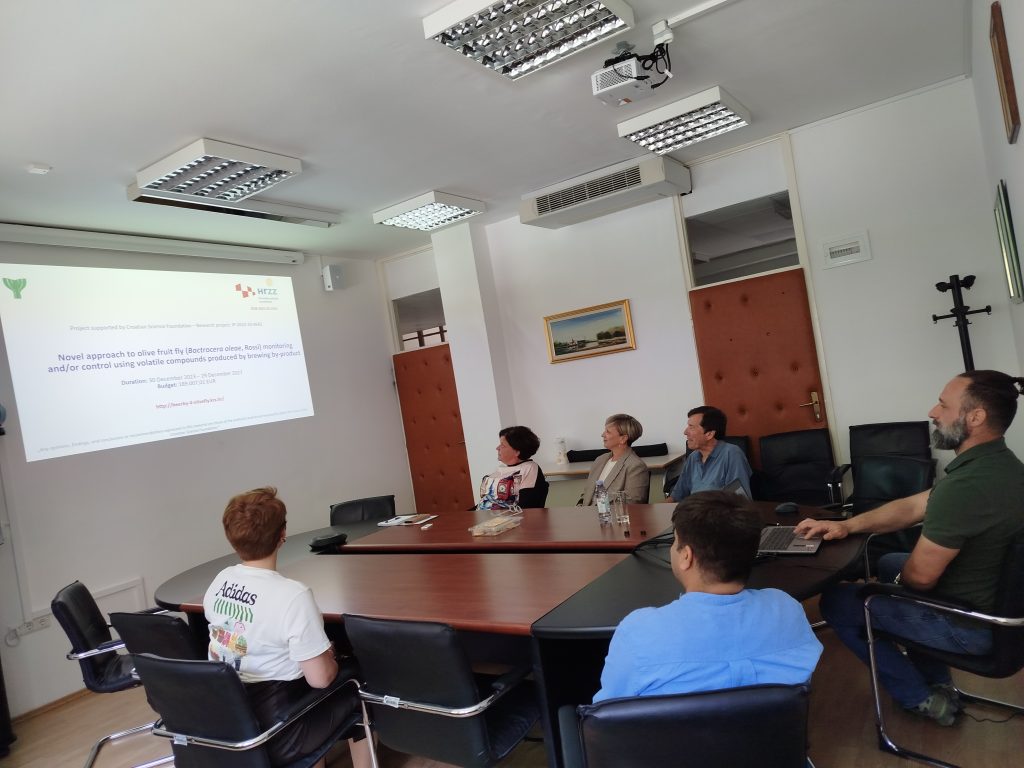
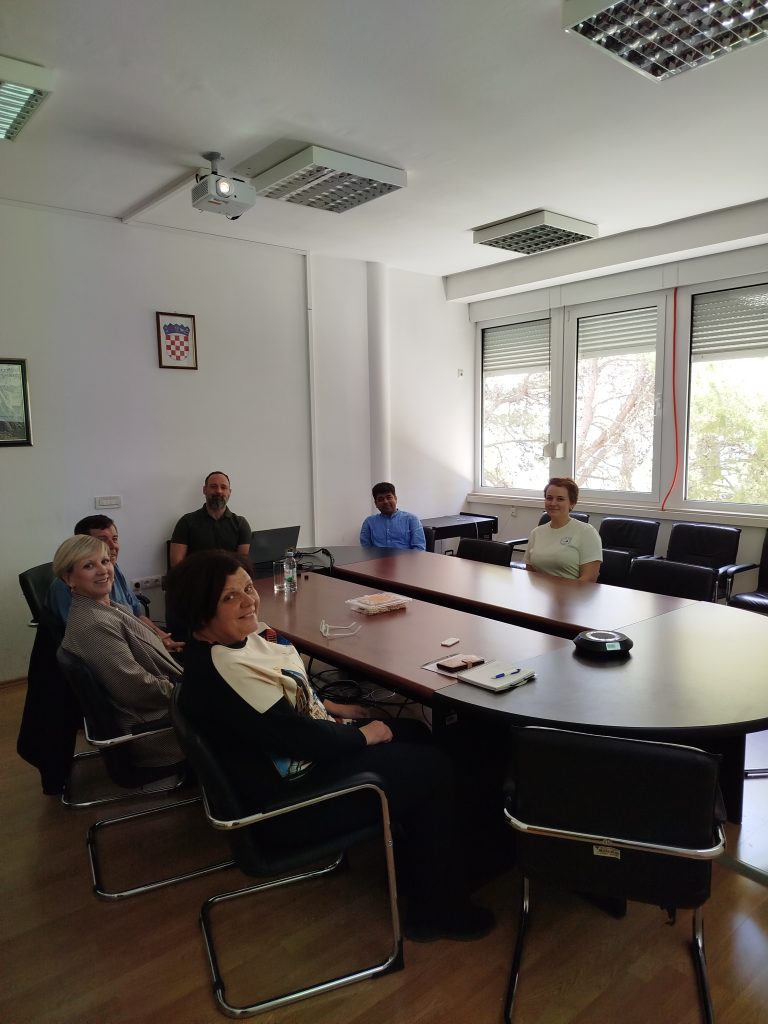
On Monday, May 4, 2026, the second meeting of the HRZZ project IP-2022-10-9643, titled “Novel approach to olive fruit fly (Bactrocera oleae, Rossi) monitoring and/or control using volatile compounds produced by brewing by-product – BeerBy-4-OliveFly,” was held at the Institute for Adriatic Crops in Split. The meeting was attended by Dr. Frank Zalom from the University of California, Davis (USA), along with project associates from the Institute and the project leader dr. Elda Vitanović. The session commenced at 11:00 AM, chaired by the project leader, Dr. Vitanović, who updated the team members on the results achieved, objectives met, completed trainings, and dissemination activities, as well as future research and measurable outcomes. Dr. Vitanović placed particular emphasis on the activities, results, goals, and procurement realized during the first two years of investigation (December 30, 2023 – December 29, 2025). During the meeting, participants also discussed results from laboratory and field trials regarding the efficacy of two modified WBYs in attracting the olive fruit fly, as well as the selection of volatile compound blends for further study.
On the second working day, May 5, 2026, Dr. Frank Zalom, Dr. Qaiser Javed, assistant Luka Čotić, and the project leader held a meeting to discuss research results and the strategic plan for publishing high-impact scientific papers.
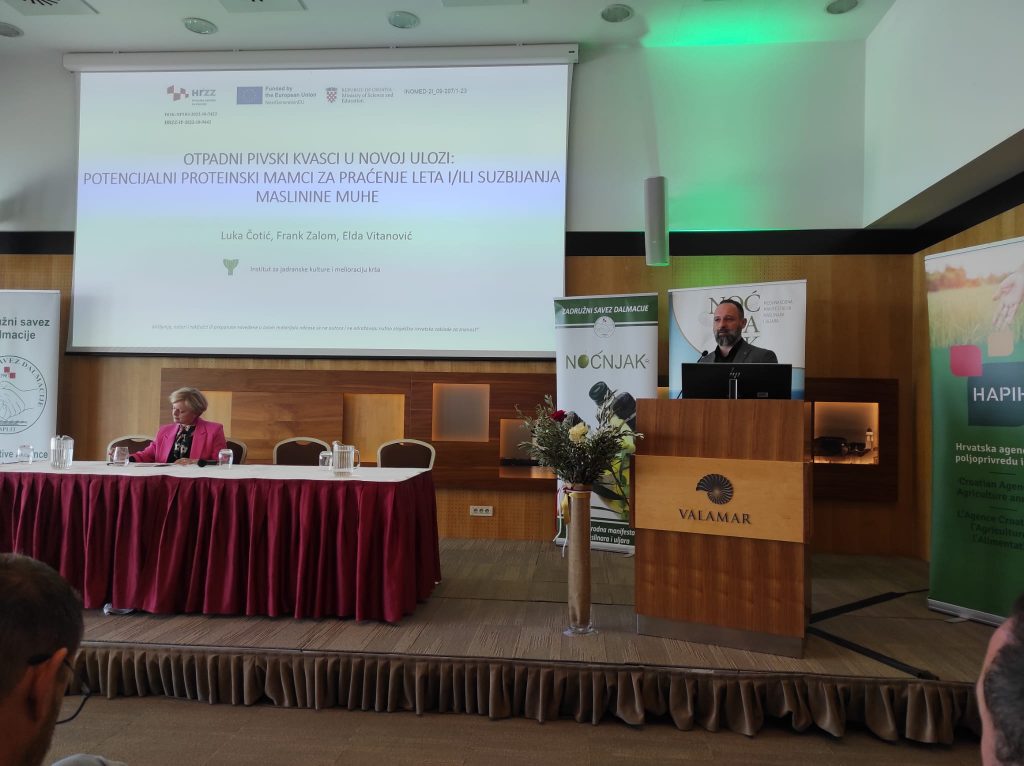
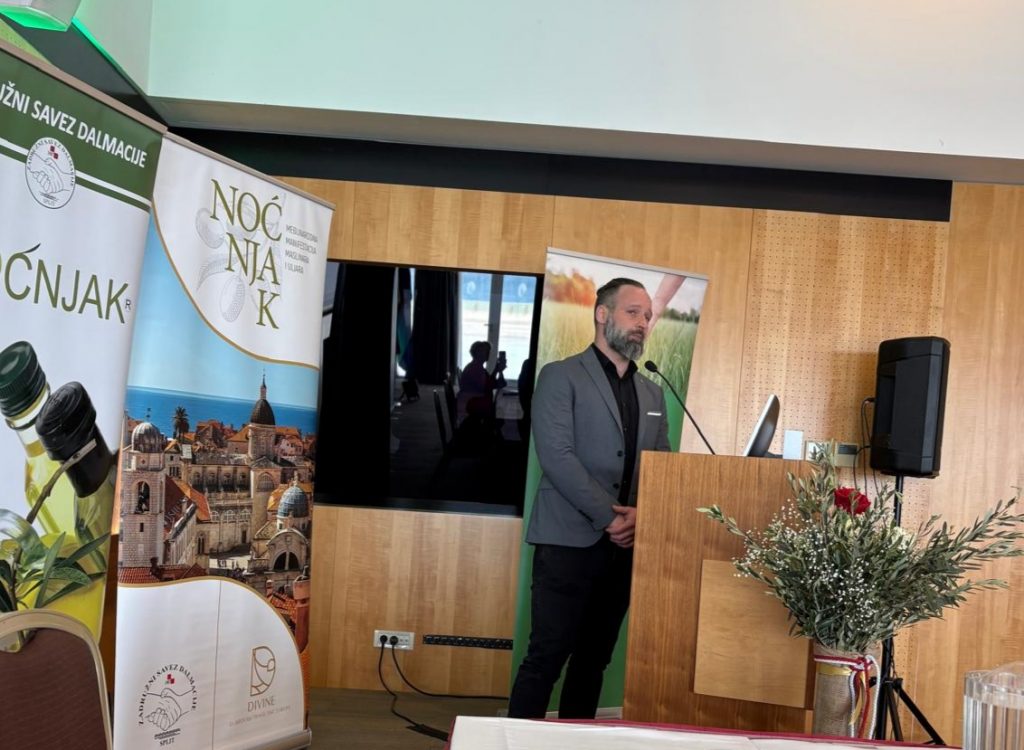
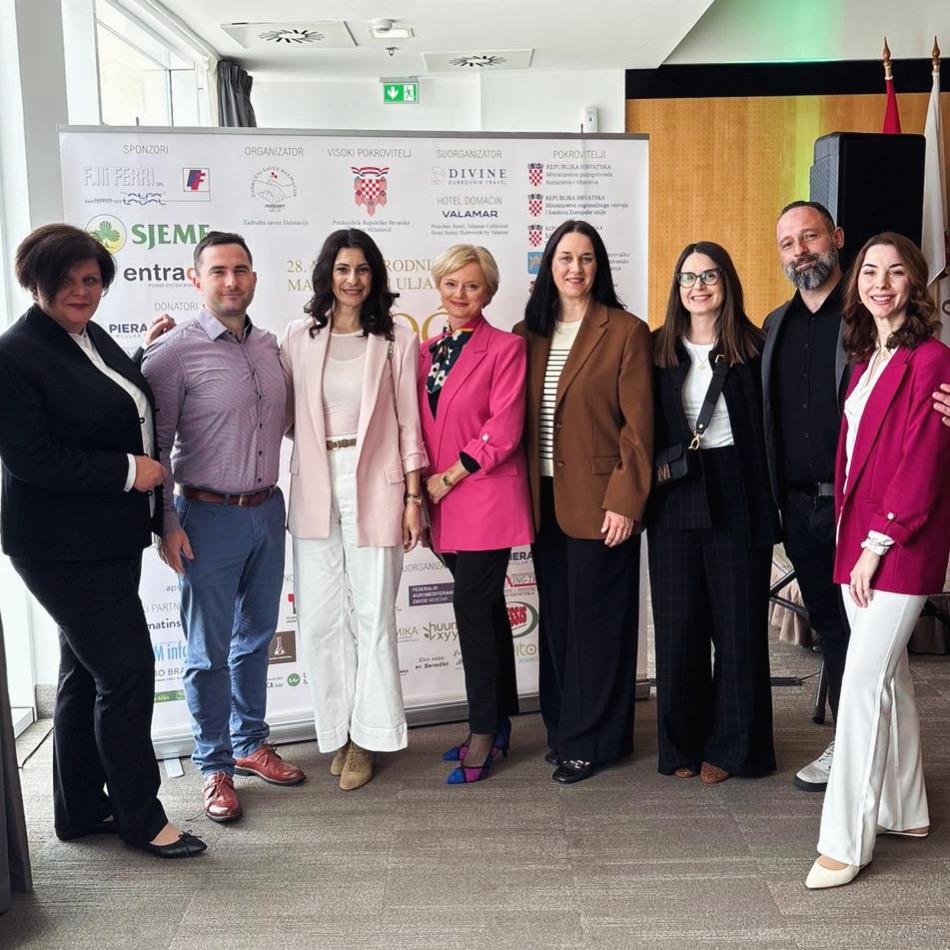
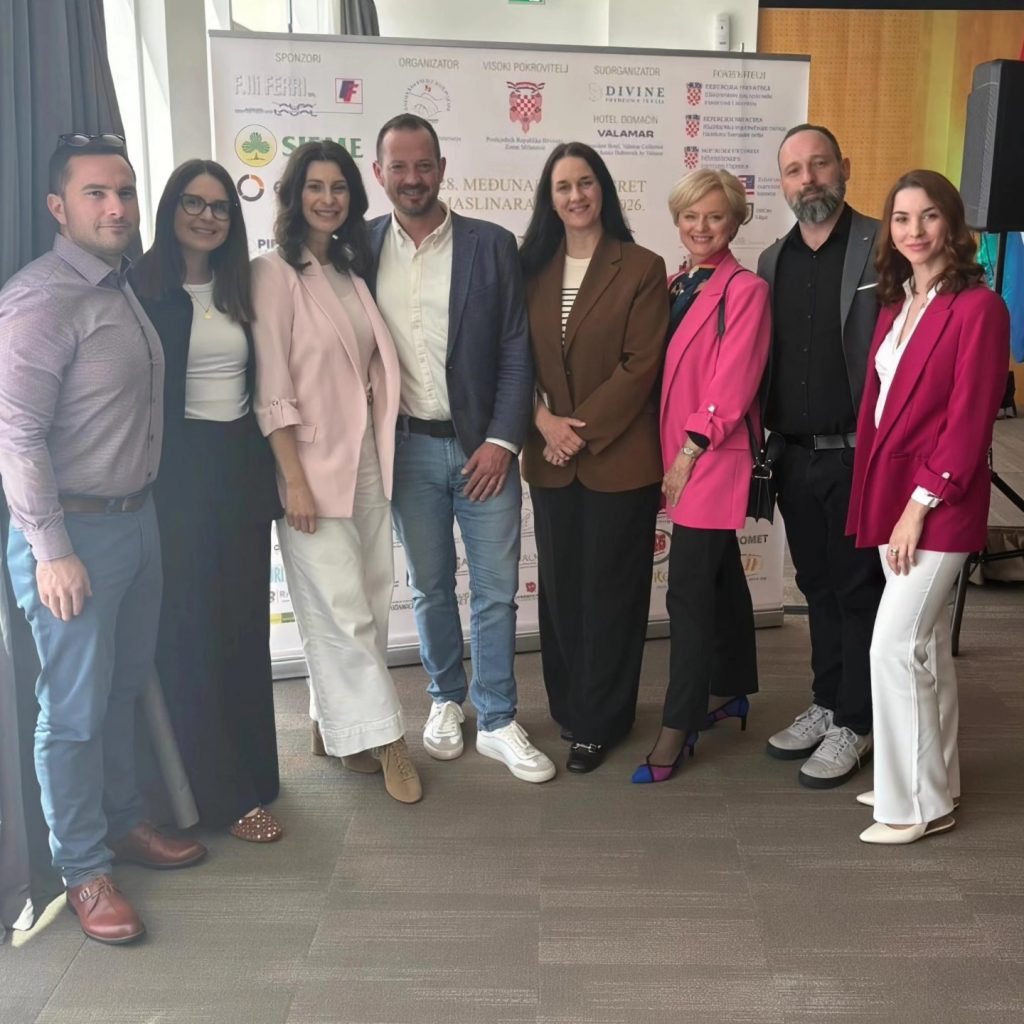
The 28th International Convention of Olive Growers and Oil Millers, “Noćnjak 2026,” organized by the Cooperative Union of Dalmatia, was held in Dubrovnik from March 26 to 29, 2026. As part of the event’s Scientific-Professional Conference, research assistant Luka Čotić (DOK-NPOO-2023-10-7422) gave a presentation titled “Waste Brewer’s Yeast in a New Role: Potential Protein Baits for Monitoring and/or Controlling the Olive Fruit Fly,” authored by Luka Čotić, Frank Zalom, and Elda Vitanović. During the presentation, Luka presented the results from the first two years of research under the Croatian Science Foundation project HRZZ-IP-2022-10-9643: “Novel approach to olive fruit fly (Bactrocera oleae, Rossi) monitoring and/or control using volatile compounds produced by brewing by-product – BeerBy-4-OliveFly,” led by Dr. Elda Vitanović. In addition to Luka, Dr. Mira Radunić, a member of the project team, also attended Noćnjak.
Dr. Mira Radunić is a Senior Research Associate at the Institute for Adriatic Crops and Karst Reclamation in the Department of Plant Sciences. She graduated from the Faculty of Agriculture at the University of Zagreb, specializing in Fruit Growing, Viticulture, and Enology. At the same faculty, she earned her Master’s degree in Biotechnical Sciences in 2003 with a thesis titled “The Influence of Training Systems on the Growth and Yield of Sweet Cherry (Prunus avium L.),” and defended her doctoral dissertation, “Reproductive Compatibility of Sweet Cherry (Prunus avium L.) Cultivars,” in 2010. Her academic career has been marked by continuous advancement: she was appointed Research Associate in 2010, Senior Research Associate in 2014, and Senior scientist in 2019 in the field of Biotechnical Sciences (Agriculture). She gained professional experience at the Fruit Center TKL as a nursery production manager, and since 2003, she has worked at the Institute for Adriatic Crops as an expert associate, research assistant, and researcher. From 2011 to 2013, she also served as Head of the Institute’s Center for Experimental Fields and Collections. As an author or co-author, she has published over 60 scientific and professional papers and has participated in numerous international and domestic conferences, workshops, and training sessions. She has actively participated in teaching at the Mediterranean Agriculture, University of Split. Dr. Radunić serves as a leader and member of research teams on various projects and conducts training programs in fruit growing, olive growing, and the sustainable use of pesticides. She is a member of the Croatian Science Foundation (HRZZ) Project Monitoring Panel, the Commission for Plant Genetic Resources at the Ministry of Agriculture, and the Commission for the Recognition of Fruit and Vine Varieties. She also leads the “Mediterranean Fruit” working group within the National Program for Plant Genetic Resources and serves on the panel for the sensory evaluation of olive oils. Her primary scientific interest is Mediterranean fruit growing, with an emphasis on the evaluation and conservation of indigenous gene pools and biodiversity.
Dr. Qaiser Javed is currently employed as a Senior Assistant at the Institute for Adriatic Crops and Karst Reclamation, Department of Applied Science. He is involved in the Croatian Science Foundation project “Novel Approach to Olive Fruit Fly (Bactrocera oleae, Rossi) Monitoring and/or Control Using Volatile Compounds Produced by Brewing By-Products – BeerBy-4-OliveFly” (IP-2022-10-9643), where he contributes to research on sustainable pest management strategies. He obtained his PhD in 2017 in Agricultural Water and Soil Engineering from Jiangsu University, China. His doctoral research focused on saline irrigation management and plant physiological responses to salt stress and re-watering. Dr. Javed previously served as an Associate Professor at Jiangsu University, China, where he conducted advanced research on biological invasions in fragile ecosystems. His work emphasized predicting the spread of invasive plant species using an integrative approach combining plant functional traits, soil physicochemical properties, and microbial and enzymatic activities. Prior to this, he completed his postdoctoral research at the same institution, focusing on growth dynamics, physiological responses, and competitive interactions of invasive plant species under varying environmental conditions. He also served as a researcher at the University of Prešov, Slovakia, where he evaluated the biological activity and ecotoxicological effects of plant extracts and essential oils derived from invasive species using laboratory-based bioassays and model organisms. In 2024, he worked as a Senior Assistant at the Institute of Agriculture and Tourism, Poreč, Croatia, where his research centered on sustainable agriculture and waste valorization, particularly the composting of olive pomace for bio-based fertilizer production. His work integrated laboratory analyses and field experiments to assess compost maturity, soil health, and plant performance.
Dr. Javed has an extensive publication record, with over 80 research articles published in high-impact SCI-indexed journals. His research contributions span plant ecology, invasive species biology, soil pollution, composting technologies, and sustainable agriculture. He has authored and co-authored numerous research papers, review articles, and book chapters, and actively contributes as a peer reviewer for international scientific journals. His primary research interests include plant ecology, soil–plant interactions, invasive species management, environmental pollution, and sustainable soil management practices. In addition to his research activities, he actively participates in international conferences, workshops, and collaborative research initiatives, demonstrating his commitment to advancing scientific knowledge and promoting sustainable agricultural and environmental practices.
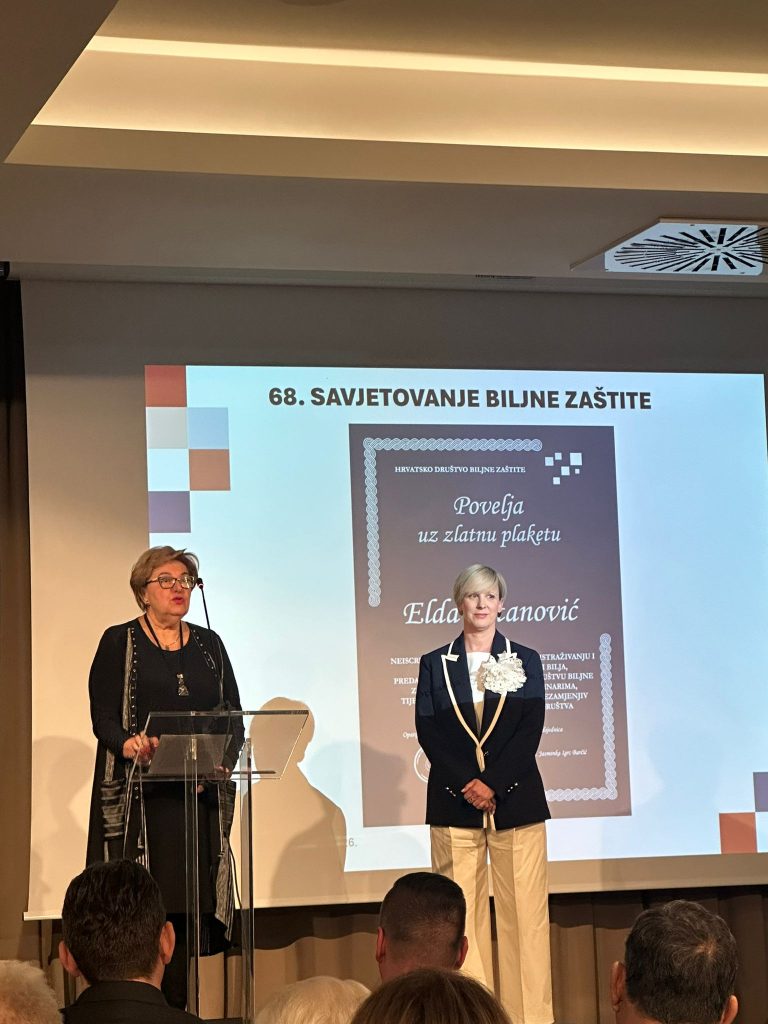
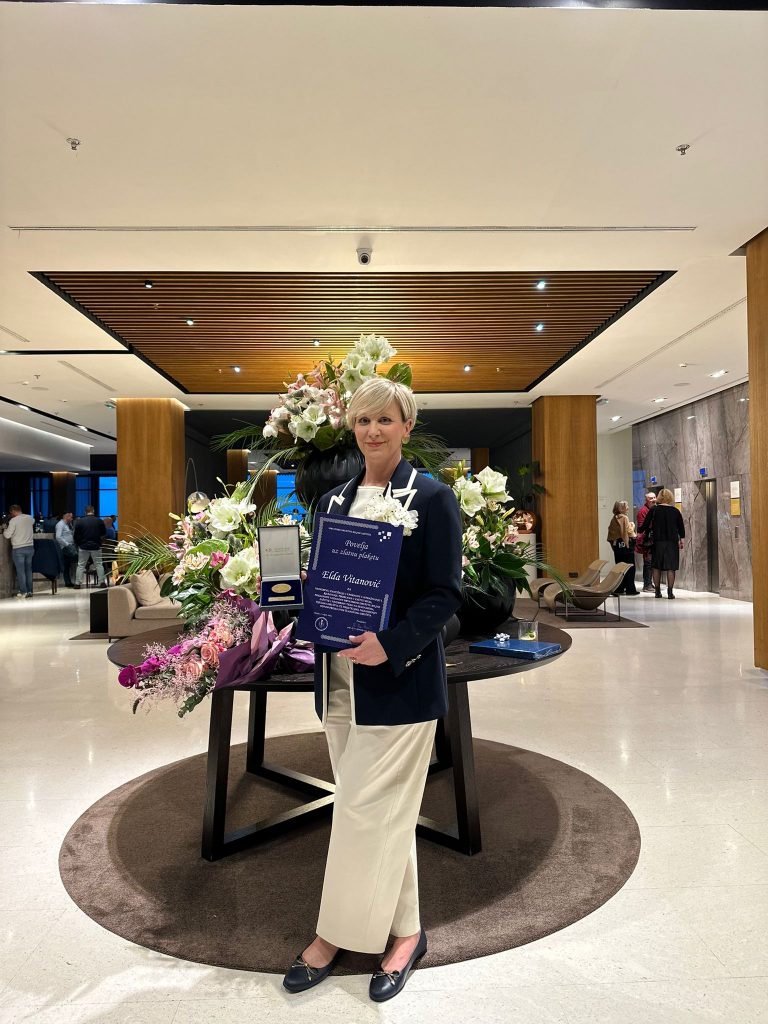
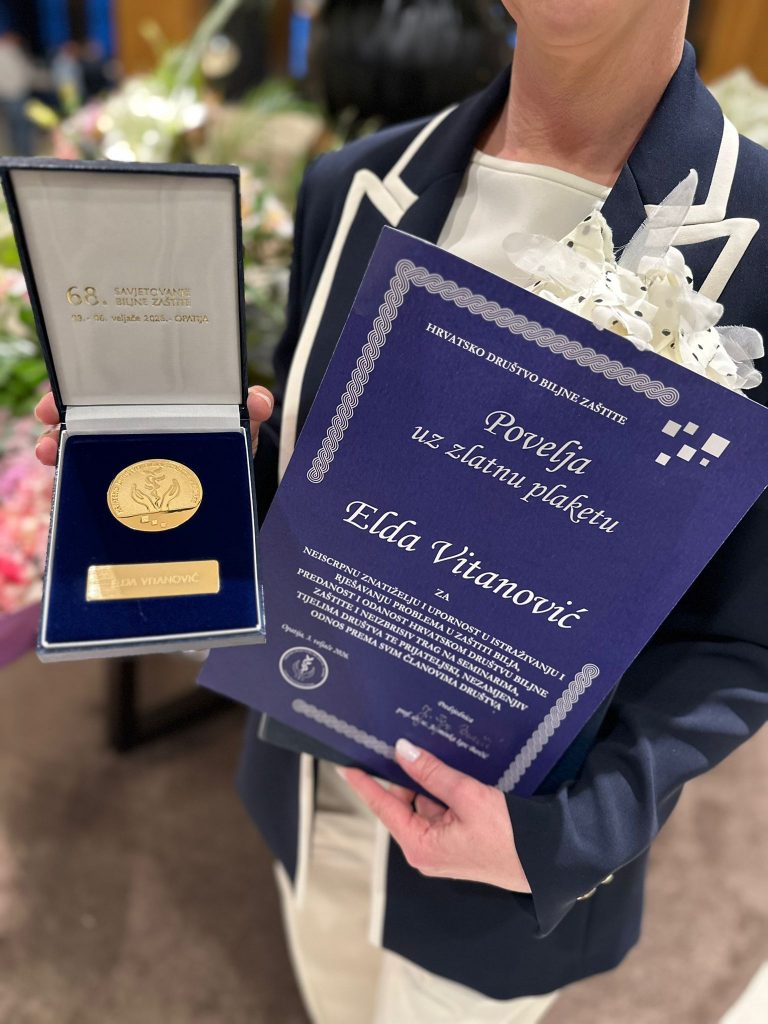
We are very proud to announce that on February 3, 2026, at the 68th Plant Protection Seminar in Opatija, project leader Dr. Elda Vitanović, was honored with the profession’s highest recognition – the Golden Plaque and Charter of the Croatian Plant Protection Society.
The award was presented by the President of the Society, Prof. dr. Jasminka Igrc Barčić, who highlighted Dr. Vitanović’s inexhaustible curiosity and perseverance in researching and solving complex problems within the field of plant protection.
Recognition of leadership and scientific excellence
This prestigious award is a testament to Dr. Vitanović’s years of dedicated work, which she today successfully integrates into leading current scientific projects. A prime example is the Croatian Science Foundation project: “Novel approach to olive fruit fly (Bactrocera oleae, Rossi) monitoring and/or control using volatile compounds produced by brewing by-product– BeerBy-4-OliveFly” (IP-2022-10-9643). As a project leader, Elda sets high standards for her research team through her expertise, dedication to the profession, and personal example.
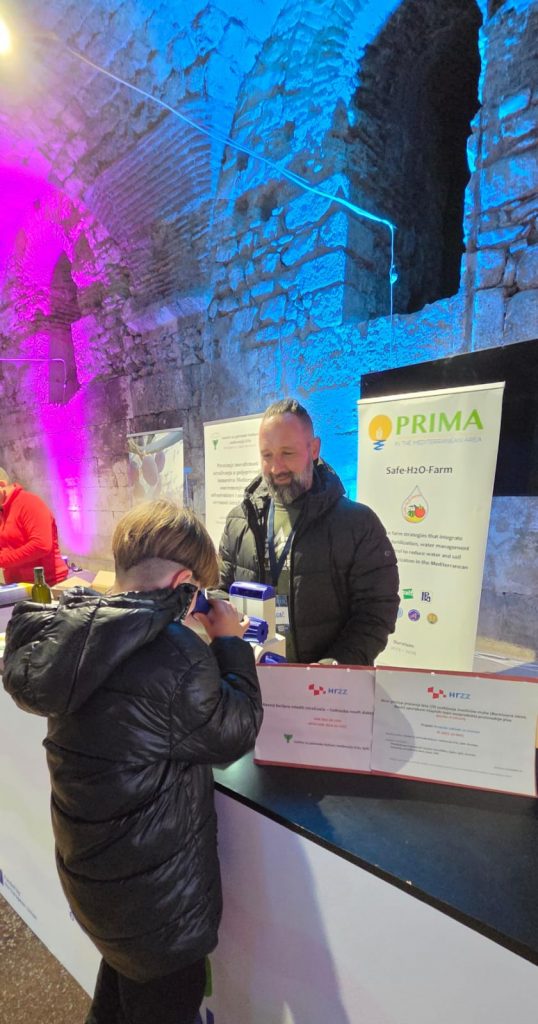
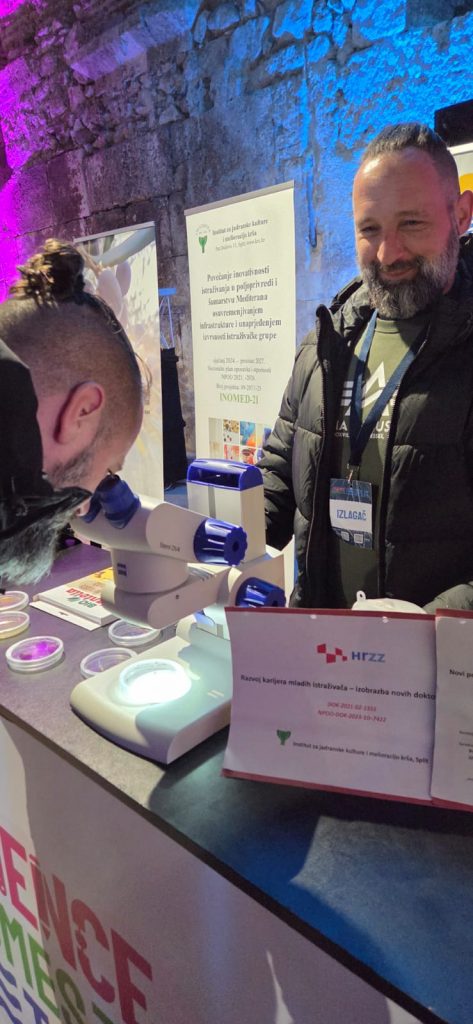
Last week, Split became the hub of European science! As part of the “Science comes to town 2026” project—organized in collaboration with Kiel and Brest—the Diocletian’s Cellars hosted numerous innovators and researchers.
Our PhD student, Luka Čotić (DOK-NPOO_2023-10-7422) , drew significant attention with the BeerBy-4-OliveFly (HRZZ-IP-2022-10-9643) project. In an engaging and interactive way, Luka showed visitors of all generations:
How to protect our olive groves using eco-friendly methods.
The latest results in the olive fruit fly monitoring and/or control.
Why the connection between science and nature is crucial for our health.
A big thank you to everyone who visited the stand and showed that Split truly breathes science!
A competition has been opened for the position of Senior Assistant to work on the Croatian Science Foundation (HRZZ) project “Novel approach to olive fruit fly (Bactrocera oleae, Rossi) monitoring and/or control using volatile compounds produced by brewing by-product – BeerBy-4-OliveFly” (IP-2022-10-9643).
The position is offered for a fixed term of up to 24 months, but not extending beyond 29 December 2027, and is full-time.
A detailed description of the requirements can be found at the following links:
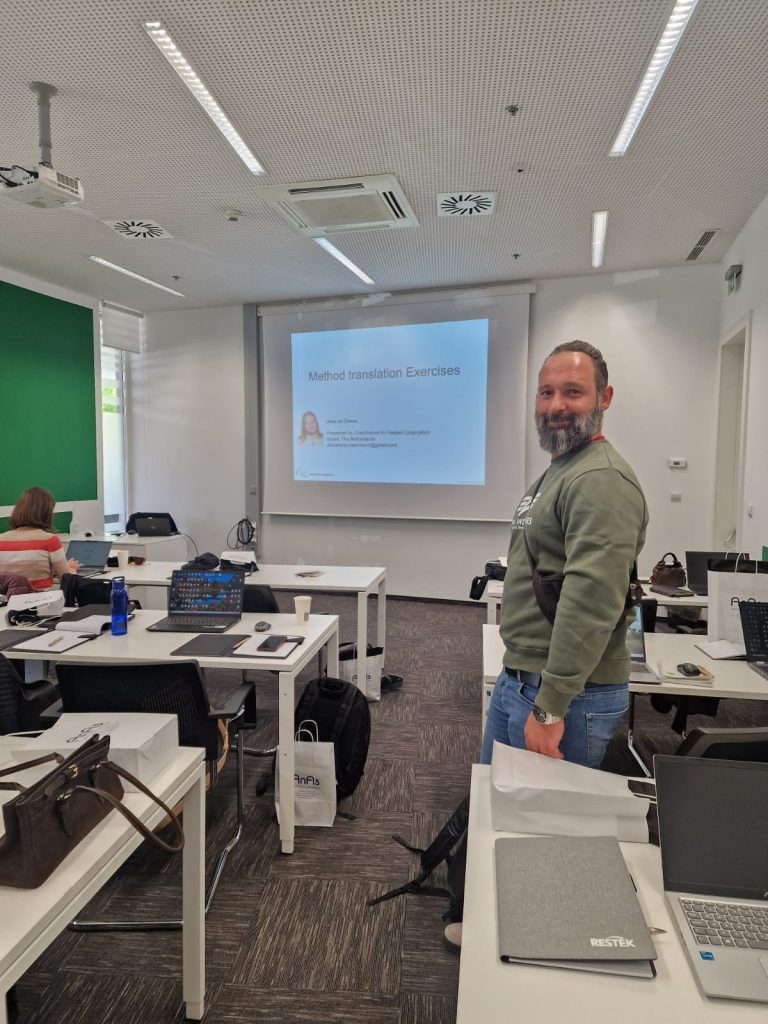
On 8 October 2025, PhD student Luka Čotić (DOK-NPOO-2023-10-7422) took part in the GC Masterclass Workshop held at the Bicro Biocentar facilities in Zagreb. The workshop was organised by Anas d.o.o. and delivered by Jaap de Zeeuw, a renowned international expert in gas and liquid chromatography.
During the workshop, Luka had the opportunity to gain deeper insight into common challenges related to sample preparation and injection into the column, as well as the importance of regularly replacing consumable parts—such as septa, liners, seals and ferrules—to ensure stable and reliable analytical performance, especially for the BeerBy-4-OliveFly project (HRZZ-IP-2022-10-9643).
In addition to practical guidance, he acquired essential knowledge on improving peak shape and reducing noise levels in GC and GC-MS techniques. The workshop also emphasised strategies for developing and optimising new analytical methods, offering valuable insights for future laboratory work and enhancing the quality of ongoing research.
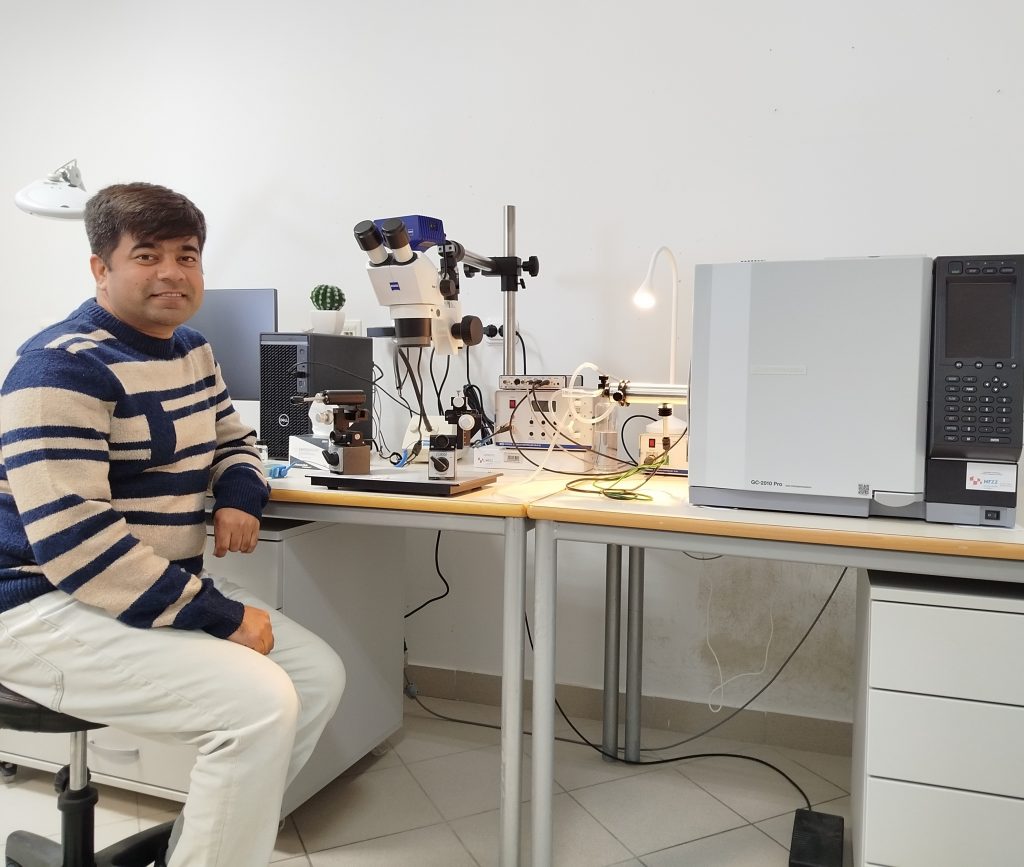
From 26 September to 3 October 2025, PhD student Luka Čotić (DOK-NPOO-2023-10-7422) and the project leader, Dr. Elda Vitanović, participated in a scientific training program on the application of EAG and GC-EAD analyses at the Institute for Adriatic Crops and Karst Reclamation in Split.
The training focused on the application of EAG and GC-EAD techniques for analyzing insect antennal responses to volatile compounds, with particular emphasis on the preparation and analysis of antennal stimuli of the olive fruit fly.
The training was conducted by Dr. Peter Ockenfels, founder and owner of Ockenfels SYNTECH GmbH.